
AI Smart Glasses, Hands-On: What Makes Them Redefine How You See
September 16, 2026
I almost forgot to take them off on day one. Not because they look cool — because they quietly made a few annoying things stop being annoying. After two weeks of real-world testing, here's the honest breakdown.
On day one with the AI Smart Glasses, I almost forgot to take them off. Not because they're flashy, but because they quietly turned a few annoyances into 'don't even think about it.' Two weeks in, here's the teardown: what they actually solve, and which pitfalls to dodge.
Core 1: Live translation, like an invisible interpreter
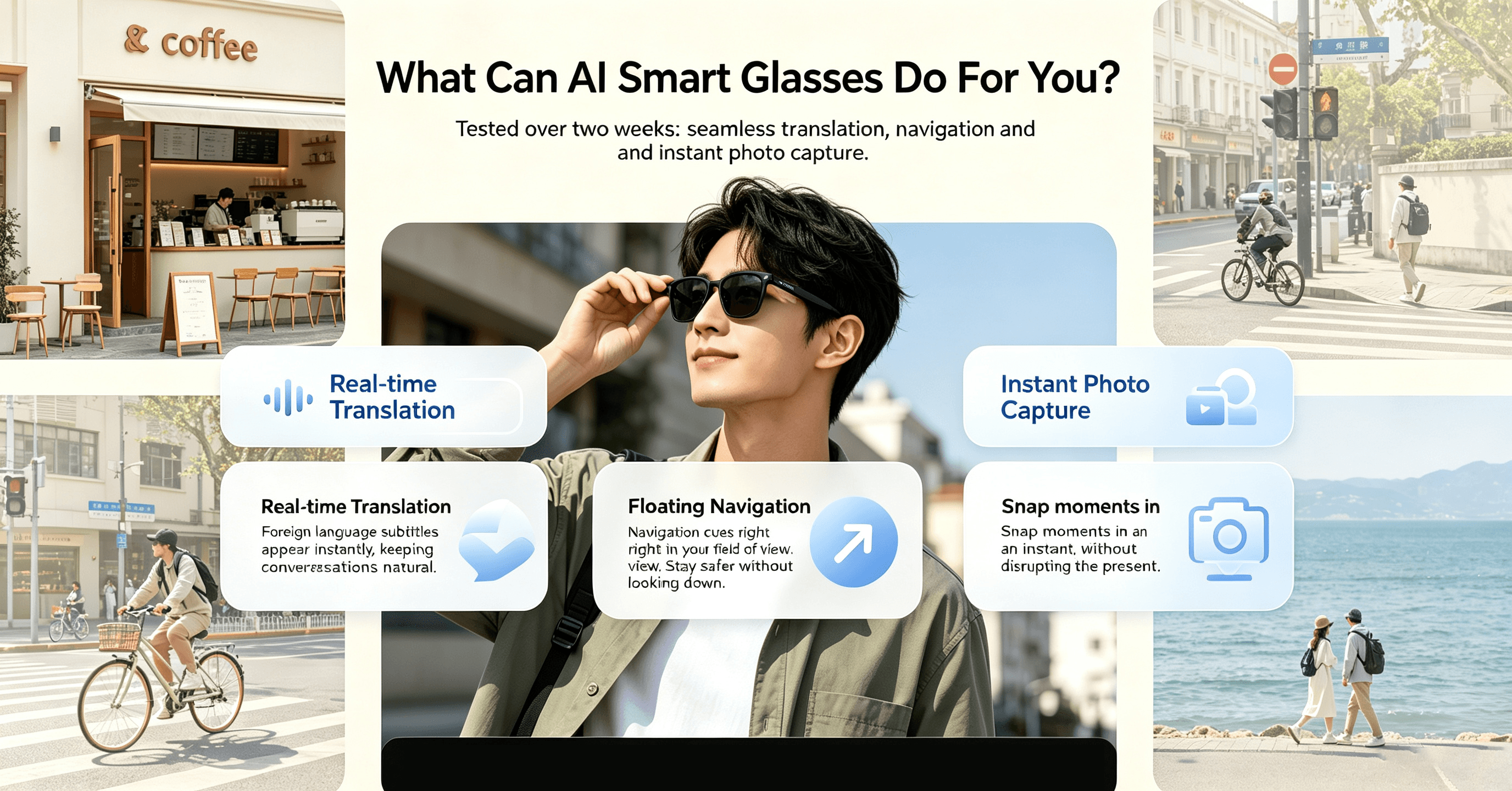
Hear a foreign language, see the translation on the lens, with latency low enough to forget it's there. In a Tokyo convenience store, a Paris museum, a Berlin taxi—I never opened a translation app. It renders sentences and keeps the speaker's tone cues, so dialogue stops feeling robotic.
Core 2: Heads-up navigation, no looking down
Turn-by-turn prompts float in your view like a game arrow. Versus holding up a phone, the safety jump is more than one notch—especially night cycling, where you stop flicking your eyes between streetlight and screen.
Core 3: Capture on tap, hands free
A touch on the temple saves the moment. Whiteboard in meetings, kid moments, street scenes on trips—no digging for a phone. Quality is good enough for social posts, but the real win is 'think it, shoot it,' with a catch rate that's absurd.
Bonus things it does on the side
● Call noise cancel: wind and voice split cleanly; the other end hears clearly.
● Message glance: WeChat and email summaries float in, skipping the noise, keeping the key.
● Voice assistant: set reminders, check weather by voice—a lazy person's dream.
Pitfalls from real testing
● Text dims a bit in strong sun; tilt your view up at noon outdoors.
● Heavy use lasts ~4–5 hours; pack the charging case for long trips.
● The privacy light stays on. Tell people before filming in public—polite and compliant.
▍ It's not another screen. It's a pair of glasses that helps you stay in the real world.
Who should buy
Frequent travelers, content documenters, or anyone curious about 'wearable AI'—safe pick, no regret. If you only want 'another earbud,' it's over-specced for now. But if you want tech to step back and life to step forward, these are the glasses.